The map of psychology
Areas of knowledge, applied branches, schools and key figures. A wide catalogue with simple navigation.
Come across a term you don't know? Check the psychology glossary, with 178 short definitions.
Areas of knowledge
Each area has three reading levels: a short introduction, a fuller explanation and an extension with references.
 Core processes
Perception
How the senses and the brain turn stimuli into a world of objects, distances and meaning. Includes illusions, face recognition and perceptual experience.
Three reading levels → Core processes
Attention
Why we cannot process everything at once: selection, distraction, sustained concentration and what happens when we do two things at once.
Three reading levels → Core processes
Learning
How behaviour changes with experience: conditioning, observational learning, deliberate practice and skill acquisition.
Three reading levels → Core processes
Memory
How we store, keep and retrieve information, why we forget and why we sometimes remember things that did not happen that way.
Three reading levels → Core processes
Thinking
Reasoning, problem solving, decision-making, beliefs and the mental shortcuts that sometimes lead us astray.
Three reading levels → Core processes
Language
How we learn to speak, how we understand and produce sentences, non-verbal communication and bilingualism.
Three reading levels → Core processes
Motivation
What moves us to act: goals, incentives, persistence, habits and self-regulation.
Three reading levels → Core processes
Emotion
What emotions are, how they are expressed, what role context plays and how we regulate them.
Three reading levels → Person and development
Personality
Traits, temperament, identity and self-concept: what is relatively stable in each person and what changes.
Three reading levels → Person and development
Intelligence and creativity
Models of intelligence, how it is assessed, what creativity is and why these topics still spark debate.
Three reading levels → Core processes
Biological psychology
Biological bases of behaviour: nervous system, hormones, genes and environment, evolution.
Three reading levels → Core processes
Neuropsychology
What brain injury and brain function teach us about memory, language, attention and behaviour.
Three reading levels → Person and development
Development
Changes and continuities across the whole lifespan, from birth to old age.
Three reading levels → Relationships
Social psychology
How others influence us: identity, attitudes, prejudice, cooperation, conformity and groups.
Three reading levels → Methods
 and statistics
How psychology is researched: designs, samples, uncertainty, correlation and causation, replication.
Three reading levels → Methods
Psychometrics and assessment
How psychology measures: reliability, validity, norms, interviews and responsible interpretation of results.
Three reading levels → Core processes
Consciousness and sleep
What it means to be conscious, why we sleep and dream, and what happens under anaesthesia, hypnosis or meditation.
Three reading levels → Core processes
Comparative psychology
What other animals think and feel, and what comparing them with us teaches us.
Three reading levels → Person and development
Psychopathology
How psychological suffering is defined, classified and explained, and where the boundaries with normality lie.
Three reading levels → Person and development
Ageing
What changes and what stays the same in the mind over the years, and what helps us age well.
Three reading levels →Person and developmentWellbeing and happiness
What we know about happiness, how it is measured and what factors support it.
Three reading levels → Relationships
 and attachment
Why we need others, how we choose partners and what makes a relationship work.
Three reading levels → Relationships
Culture and mind
How culture shapes the way we perceive, feel, think and understand ourselves.
Three reading levels → Relationships
Health and behaviour
How stress, habits and beliefs influence physical health, and how behaviours are changed.
Three reading levels →How the way of studying the mind has changed
We always separate historical importance from current scientific support.
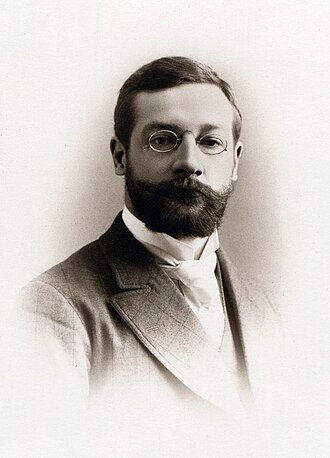
Structuralism
Breaking conscious experience down into its elements.
Read →
Functionalism
Asking what the mind is for in adaptation.
Read →
Psychoanalysis
The unconscious, conflict and personal history.
Read →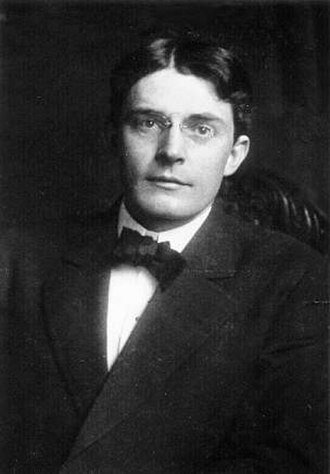
Behaviourism
Studying observable behaviour and how it is learned.
Read →Gestalt
The whole is different from the sum of its parts.
Read →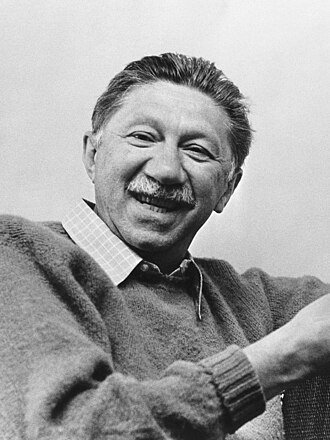
Humanism
Personal experience, growth and freedom.
Read →
Cognitive psychology
The mind as a system that processes information.
Read →
Sociocultural approaches
The mind is formed through interaction and culture.
Read →
Systemic approaches
People within systems: families, groups, communities.
Read →
Contextual approaches
Behaviour understood in its context and function.
Read →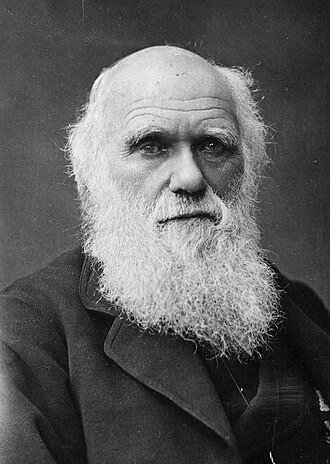
Evolutionary perspectives
What functions psychological processes may have had in evolution.
Read →
Cognitive neuroscience
How the brain makes memory, attention and language possible.
Read →Embodied cognition
We think with the body and in an environment, not only with the brain.
Read →
Positive psychology
Also studying what makes a life go well.
Read →Existential psychology
Meaning, freedom, isolation and death as psychological questions.
Read →
Feminist psychology
Reviewing what was studied, in whom, and with what assumptions about gender.
Read →
Liberation psychology
A Latin American psychology serving the majority.
Read →Cross-cultural psychology
Checking whether what we know holds across cultures.
Read →Where psychology works
Besides clinical work, psychology is applied in education, business, justice, sport, the environment and technology.

Clinical and health
Assessment, prevention, intervention, chronic illness and quality of life.
Read →
Educational
Learning, guidance, educational difficulties and family–school relations.
Read →
Work and organisations
Teams, recruitment, leadership, negotiation and occupational health.
Read →
Legal and forensic
Testimony, memory, expert assessment and the justice system.
Read →Social and community
Participation, exclusion, support networks and living together.
Read →
Sport and performance
Concentration, pressure, motivation and teamwork.
Read →
Environmental
Our relationship with spaces, nature, cities and environmental behaviour.
Read →
Consumer and economic
Purchasing decisions, advertising, risk and financial habits.
Read →
Technology and human factors
Usability, attention, social media, interaction with AI and design.
Read →
Rehabilitation and disability
Adaptation, participation, autonomy and environmental barriers.
Read →Cultural
Diversity of experience and the relationship between culture and psychological processes.
Read →
Art and music
Aesthetic perception, creativity, musical experience and emotions.
Read →Biographies
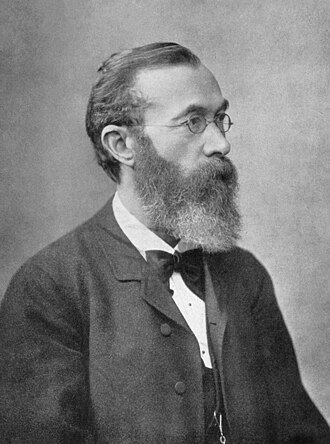 1832–1920
Wilhelm Wundt
German physician and philosopher. He organised one of the first psychology laboratories in Leipzig and trained a generation of researchers from around the world.
1842–1910William James
American physician, psychologist and philosopher. His Principles of Psychology (1890) described consciousness as a stream and shaped generations of readers.
1863–1930Mary Whiton Calkins
American psychologist and philosopher. She completed every requirement for a Harvard doctorate, which was refused because she was a woman, and was the first woman to preside over the American Psychological Association.
 1871–1939
Margaret Floy Washburn
American psychologist, the first woman to earn a doctorate in psychology (Cornell, 1894). Her book The Animal Mind was a standard text in comparative psychology.
1856–1939Sigmund Freud
Austrian neurologist and founder of psychoanalysis. He proposed that much of mental life is unconscious and developed a talking treatment that influenced all later psychotherapy.
 1849–1936
Iván Pávlov
Russian physiologist, winner of the 1904 Nobel Prize in Medicine for his work on digestion. While studying salivation in dogs he described the conditioned reflex, the basis of classical conditioning.
1878–1958John B. Watson
American psychologist and founder of behaviourism. He argued that psychology should study only observable behaviour and applied conditioning to human emotions in the controversial Little Albert case.
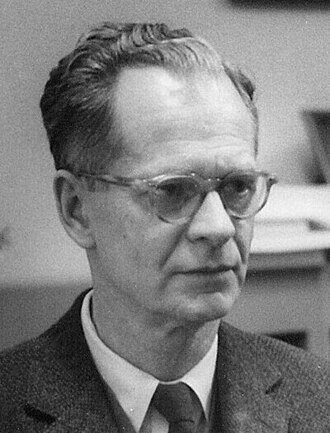 1904–1990
B. F. Skinner
American psychologist and the central figure of radical behaviourism. He studied how the consequences of a behaviour make it more or less likely to recur, which he called operant conditioning.
 1880–1943
Max Wertheimer
Prague-born psychologist and founder of Gestalt psychology. His study of apparent motion showed that we perceive organised wholes, not sums of separate sensations.
1887–1967Wolfgang Köhler
German Gestalt psychologist. In Tenerife he studied how chimpanzees solved problems and described learning by sudden understanding, or insight.
 1896–1980
Jean Piaget
Swiss biologist and epistemologist. He studied how children construct knowledge and proposed one of the most influential theories of development of the twentieth century.
1896–1934Lev Vygotski
Soviet psychologist who argued for the social and cultural origin of the mind. He proposed that we learn with the help of others and of tools such as language, and formulated the zone of proximal development.
 1886–1969
Frederic Bartlett
British psychologist who showed that remembering is reconstructing. With the story 'The War of the Ghosts' he found that memory adapts experience to our cultural schemas.
 1913–1999
Mary Ainsworth
American-Canadian developmental psychologist. She observed families in Uganda and Baltimore, created the Strange Situation and described children's attachment styles.
1907–1990John Bowlby
British psychiatrist and psychoanalyst who created attachment theory. He argued that a baby's bond with its caregivers is a basic need, not just a by-product of being fed.
 1902–1987
Carl Rogers
American psychologist who championed humanistic psychology and person-centred therapy. He argued that the therapist's empathy, acceptance and genuineness foster change.
1908–1970Abraham Maslow
American psychologist and one of the founders of humanistic psychology. He proposed a hierarchy of needs culminating in self-actualisation, though he never drew it as a pyramid.
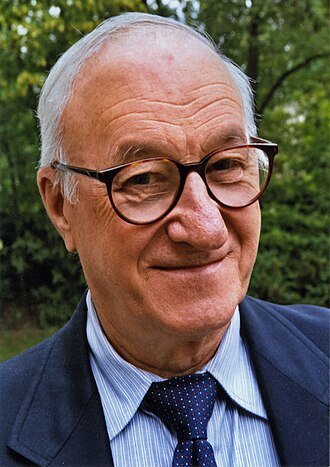 1925–2021
Albert Bandura
Canadian psychologist who showed that we learn by watching others. His Bobo doll experiment and his concept of self-efficacy made him one of the most cited psychologists in the world.
 1902–1977
Alexander Luria
Soviet neuropsychologist. A colleague of Vygotsky, he studied how culture shapes thinking and founded modern neuropsychology through his work with soldiers wounded in the Second World War.
 n. 1918
Brenda Milner
British-Canadian neuropsychologist. Her study of the patient H. M. showed that memory depends on specific brain regions and that there are several distinct memory systems.
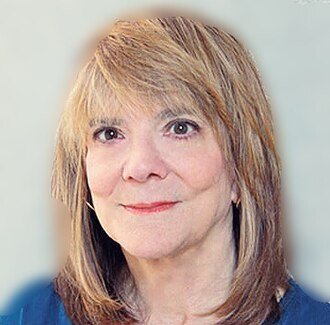 n. 1944
Elizabeth Loftus
American psychologist. Her experiments showed that memories can be altered by later information, with direct consequences for trials and eyewitness testimony.
 1928–2012
Ulric Neisser
German-born American psychologist. His book Cognitive Psychology (1967) gave the field its name, and he later argued for studying memory and perception in real life.
 1934–2024
Daniel Kahneman
Israeli-American psychologist and winner of the 2002 Nobel Prize in Economics. With Amos Tversky he showed that we judge and decide using shortcuts that produce systematic errors, founding behavioural economics.
 1937–1996
Amos Tversky
Israeli cognitive psychologist. With Daniel Kahneman he showed that people judge and decide using mental shortcuts that produce systematic biases, and together they formulated prospect theory.