Curiosity teaches too
Classic experiments with their context, ethics and later revisions. Anecdotes are sourced; doubtful ones are flagged or left out.
203 curiosities. Filter by series:
 Your perception surprises you
The Stroop effect: when reading gets in the way
Say the colour of the ink aloud, not the word. It sounds easy until you try.
Read → Myths that sound scientific
Does listening to Mozart make you smarter?
How a small study became a commercial phenomenon, and what later research found.
Read → Experiments that changed questions
Asch and group pressure: what is usually forgotten
The line experiment is famous for conformity. But most answers were independent.
Read →Experiments that changed questionsMilgram and obedience to authority
How far will an ordinary person go when someone in a lab coat tells them to continue?
Read →What the original study did not sayThe Stanford prison experiment: less science than it seemed
A famous experiment on the power of roles that is now told with many caveats.
Read →What the original study did not sayThe marshmallow test: waiting does not explain everything
One treat now or two in a while. What that wait predicts is less than was claimed.
Read →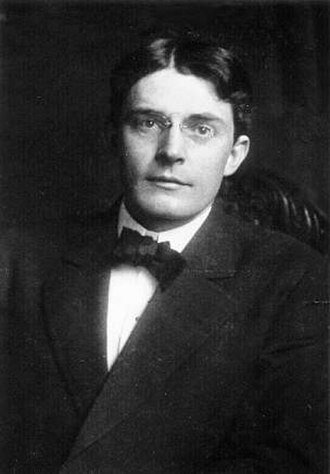 Experiments that changed questions
Little Albert and learned fear
In 1920, Watson set out to show that a baby could learn to fear a white rat.
Read →Forgotten figuresMary Cover Jones, the mother of behaviour therapy
In 1924 she helped a boy lose his fear of rabbits. It was the first step towards graded exposure.
Read →The story behind an ideaThe placebo effect: when expectation heals (a little)
A pill with no active ingredient can ease symptoms. The interesting part is when and why.
Read →The story behind an ideaClever Hans, the horse that read people
He seemed to solve sums by tapping his hoof. In fact he responded to cues nobody knew they gave.
Read →What the original study did not sayThe Hawthorne effect: do we improve just because we are watched?
A factory, some light bulbs and a conclusion the original data do not fully support.
Read →What the original study did not sayKitty Genovese and the bystander effect
"38 witnesses and nobody did anything." The headline was false, but it inspired very real research.
Read →Your perception surprises youThe invisible gorilla
Half of people miss someone in a gorilla suit walking across the scene. Would you?
Read →Your perception surprises youChange blindness: we fail to notice the person we are talking to has been swapped
Someone asks you for directions, a door passes between you and a different person is now in front of you.
Read →Myths that sound scientific"We only use 10% of our brain"
One of the most repeated myths in popular psychology. No study supports it.
Read →Myths that sound scientificAre you left-brained or right-brained?
The hemispheres specialise in some tasks, but nobody "thinks with one side".
Read →Myths that sound scientificLearning styles: visual, auditory, kinaesthetic
Very popular in schools, but tailoring teaching to each pupil's "style" does not improve what they learn.
Read →Myths that sound scientificThe polygraph does not detect lies
It measures nerves, not truth. That is why courts in many countries do not admit it as evidence.
Read →Myths that sound scientificMemory is not a recording
Remembering is rebuilding. That is why we can be sure of something that never happened.
Read → Experiments that changed questions
"How fast were the cars going when they smashed?"
Changing one verb in a question was enough for people to remember broken glass that was not there.
Read → The story behind an idea
H. M., the man who could not form new memories
A 1953 operation took away his ability to remember anything new and taught science how memory works.
Read →The story behind an ideaPhineas Gage and the iron bar
In 1848 a bar went through his skull. He survived, and his case changed what we knew about the brain and personality.
Read →The story behind an idea"Tan": the patient who named Broca's area
He could say only one syllable. His brain showed where speech is produced.
Read → What the original study did not say
Did Pavlov really use a bell?
The dog drooling at a bell is a famous image. The records mostly mention metronomes and buzzers.
Read →Experiments that changed questionsThorndike's cats and the law of effect
Cats shut in boxes that learned to escape by trial and error. That is how the study of reinforcement began.
Read →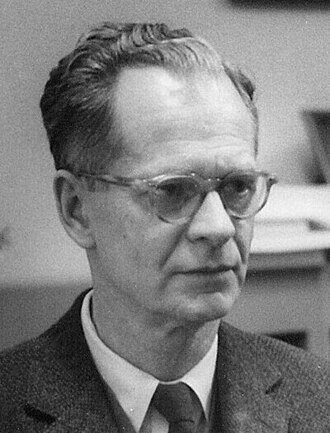 Experiments that changed questions
Skinner's superstitious pigeons
Food at fixed intervals, whatever they did. The pigeons ended up with rituals of their own.
Read →The story behind an ideaProject Pigeon: pigeons to guide missiles
During the Second World War, Skinner trained pigeons to peck at a target on a screen to steer a bomb.
Read →Experiments that changed questionsHarlow's monkeys: comfort outweighs milk
Infant monkeys preferred a cloth mother with no food to a wire one with a bottle.
Read →What the original study did not sayThe Pygmalion effect in the classroom
What a teacher expects of a pupil can influence their performance, though less than was claimed.
Read →The story behind an ideaWhen Prophecy Fails: the origin of cognitive dissonance
A group expected the end of the world on 21 December 1954. When it did not come, their faith grew stronger.
Read →Experiments that changed questionsRobbers Cave: rivalry and cooperation
Two groups of boys at a summer camp, a competition and a way to reconcile them.
Read →What the original study did not sayThe Dunning-Kruger effect, with nuance
"The ignorant do not know they are ignorant." The original study says something more modest, and part of the effect is statistical.
Read →Your perception surprises youThe Müller-Lyer illusion
Two equal lines that look different lengths. And a debate on whether culture changes what we see.
Read →Your perception surprises youThe dress: blue and black or white and gold?
In 2015 a photo split the internet. It showed that each brain decides differently what light is falling on a scene.
Read →Your perception surprises youYanny or Laurel?
A 2018 recording in which some heard one word and others another. Hearing interprets too.
Read →Your perception surprises youThe McGurk effect: hearing with your eyes
You see lips saying "ga", you hear "ba"… and you perceive "da".
Read →Your perception surprises youThe Ames room
Two people of the same height look like a giant and a dwarf depending on which corner they stand in.
Read →What the original study did not sayThe magical number seven, plus or minus two
Miller spoke of seven items in short-term memory. Today the figure is thought to be closer to four.
Read →Myths that sound scientific"If they look up and to the right, they are lying"
An idea from neuro-linguistic programming that has failed every test.
Read →Myths that sound scientificDoes the full moon fill emergency rooms?
Many health workers believe it. Decades of data show no such effect.
Read →Myths that sound scientific"Eat popcorn": the subliminal advertising that never happened
In 1957 an advertiser claimed he had boosted a cinema's sales with hidden messages. He had made it up.
Read →Forgotten figuresMamie and Kenneth Clark: the doll test
A study with black and white dolls that reached the US Supreme Court.
Read →Forgotten figuresLeta Hollingworth against the myths about women
In 1914 she showed with data that menstruation does not reduce mental ability.
Read →The story behind an ideaThe Zeigarnik effect: what is left unfinished
A waiter who remembered unpaid orders and forgot them once paid inspired this experiment.
Read →The story behind an ideaThe halo effect
If someone seems attractive or likeable, we tend to assume they are also clever and honest.
Read →Experiments that changed questionsA rigged wheel and the anchoring effect
A random number changed people's estimates about African countries in the UN.
Read →Experiments that changed questionsSaving 200 or letting 400 die
The same decision, told in two ways, leads people to choose the opposite. It is the framing effect.
Read → The story behind an idea
Losing hurts more than winning
Losing 50 euros affects us more than winning 50 pleases us. This idea earned a Nobel Prize in Economics.
Read →Experiments that changed questionsThe IKEA effect: we value more what we build
An origami box or a piece of furniture you assembled yourself seems worth more than one made by someone else.
Read →Experiments that changed questionsWe like what we have seen before
Made-up words, Chinese characters or songs: familiarity breeds liking.
Read →Experiments that changed questionsThe "Eat at Joe's" sign: we think others think like us
Walking around campus wearing a silly sign. How many would agree? It depends on what you decided.
Read →Experiments that changed questionsThe Fidel Castro essays and the fundamental attribution error
Even knowing the writer had not chosen their position, people attributed that opinion to them.
Read →Experiments that changed questionsThe Good Samaritan in a hurry
Seminarians on their way to talk about the Good Samaritan walked past someone in distress.
Read →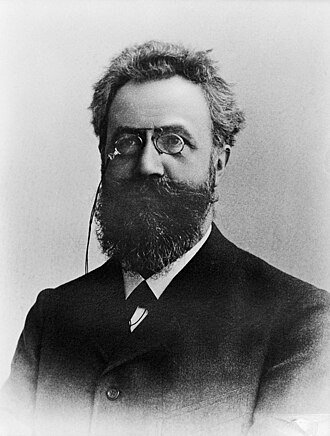 The story behind an idea
First and last: the serial position effect
From a list we remember the beginning and end best. The middle gets lost.
Read →Your perception surprises youNow I see it everywhere: the frequency illusion
You buy a red car and suddenly the city is full of red cars.
Read →Your perception surprises youPareidolia: faces in plugs and on the Moon
We see faces in clouds, toast and house fronts. The brain prefers to err on the side of seeing too many.
Read →Your perception surprises youThe hollow-face illusion
You look at the inside of a mask and see it standing out towards you.
Read →Myths that sound scientific"Opposites attract"
In love and friendship the reverse is almost always true: we are drawn to people like us.
Read →Myths that sound scientificDoes punching a pillow calm anger?
The idea of "letting off steam" is old. Experiments show it usually makes anger worse.
Read →Myths that sound scientific"Hypnosis recovers forgotten memories"
Hypnosis increases confidence in what is remembered, but not its accuracy.
Read →Psychology in film, literature and musicSatanic messages played backwards in rock
Playing a record backwards and hearing hidden phrases. The trick lies in what you are told you will hear.
Read →Forgotten figuresCharles Henry Turner and the minds of insects
An African American scientist who showed in the early twentieth century that bees see colours and ants learn.
Read →Forgotten figuresFrancis Cecil Sumner, the first African American PhD in psychology
He earned his doctorate in 1920 and trained a whole generation of psychologists at Howard University.
Read →What the original study did not sayRosenhan: being sane in insane places
Eight healthy people faked hearing voices and were admitted to psychiatric hospitals. Half a century later, the study is in doubt.
Read →Experiments that changed questionsThe Barnum effect: one horoscope for everyone
A lecturer gave his students the "same" personality profile. Almost all found it very accurate.
Read →The story behind an ideaThe self-fulfilling prophecy
If everyone believes a bank will fail, it ends up failing. An idea from the sociologist Robert Merton.
Read →What the original study did not sayLearned helplessness, fifty years on
Dogs that stopped trying to escape. Its discoverer admitted in 2016 that he had understood it the wrong way round.
Read →The story behind an ideaTriplett's cyclists and social facilitation
In 1898, a cycling-loving psychologist noticed that people rode faster in company.
Read →The story behind an ideaRingelmann and the rope: the more people, the less each one pulls
A French agricultural engineer discovered that we put in less effort in a group.
Read →The story behind an ideaThe Bay of Pigs and groupthink
A group of brilliant people made a disastrous decision. Irving Janis wanted to understand why.
Read →What the original study did not sayThe Yerkes-Dodson law was not about stress
The famous inverted U of performance comes from an experiment with mice and shocks.
Read →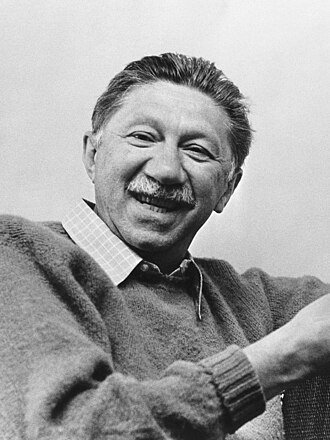 What the original study did not say
Maslow never drew a pyramid
The most famous image of his theory was made by others, and it greatly simplifies what he wrote.
Read →What the original study did not sayThe 10,000-hour rule
A popular book turned an average from a study of violinists into a rule.
Read →What the original study did not sayPower poses
Standing like Superman for two minutes would change your hormones. Replications did not confirm it.
Read →What the original study did not sayDoes willpower run out like a muscle?
Resisting biscuits would leave you without the energy to solve a puzzle. A large study did not find the effect.
Read →Your perception surprises youThe Thatcher illusion: upside-down faces
A face with its eyes and mouth flipped looks normal… until you turn it the right way up.
Read →Your perception surprises youThe Ebbinghaus circles
A circle surrounded by large circles looks smaller than an identical one surrounded by small ones.
Read →Your perception surprises youAdelson's checker shadow
Two squares of exactly the same grey that the brain refuses to see as equal.
Read →Myths that sound scientific"Men think about sex every seven seconds"
That would be more than 8,000 times a day. When it has been measured, the figure is far lower.
Read →Myths that sound scientific"Old age is a sad stage of life"
Many studies find the opposite: emotional well-being tends to improve with age.
Read →Myths that sound scientific"Sugar makes children hyperactive"
Many parents believe it, but blind studies do not show it. What changes is how adults see them.
Read →Forgotten figuresChristine Ladd-Franklin, the doctor without a degree
She finished her thesis in 1882 but was not awarded her doctorate until 1926 because she was a woman.
Read →Forgotten figuresInez Beverly Prosser and the education of Black children
The first African American woman with a PhD in psychology studied in 1933 whether school segregation helped or harmed.
Read →Psychology in film, literature and musicHitchcock's Psycho: what the film gets mixed up
A suspense masterpiece that mixed up psychosis, dissociated identity and violence, and left a lasting stigma.
Read →Psychology in film, literature and musicOne Flew Over the Cuckoo's Nest and electroconvulsive therapy
The film showed a treatment used as punishment. Today's therapy is very different.
Read →Psychology in film, literature and musicA Beautiful Mind: the real story of John Nash
The Nobel-winning mathematician lived with schizophrenia. The film changed some important details.
Read →Psychology in film, literature and musicRain Man and the real Kim Peek
Dustin Hoffman's character was inspired by a man with a prodigious memory. His story was different.
Read →Psychology in film, literature and musicMemento: a film that understands amnesia
A man who cannot form new memories gets by with tattoos and photos. It is one of cinema's most faithful portrayals.
Read →Psychology in film, literature and musicInside Out and the basic emotions
Pixar consulted psychologists to bring Joy, Sadness, Fear, Anger and Disgust to life. And it got something important right.
Read →Psychology in film, literature and musicDon Quixote and madness in literature
Cervantes created a lucid madman who has fascinated psychiatrists for four centuries.
Read →Psychology in film, literature and musicJekyll and Hyde are not a mental disorder
Stevenson's novel is a moral allegory. It has been misused to talk about bipolar disorder or split personality.
Read →The story behind an ideaStendhal syndrome: dizzy with beauty
In 1817 a writer felt palpitations leaving a church in Florence. A psychiatrist later gave it a name.
Read →What the original study did not sayStockholm syndrome, more myth than syndrome
It was born of a 1973 robbery and the remarks of a psychiatrist who never spoke to the hostages.
Read →The story behind an ideaThe Werther effect and the Papageno effect
How the media report a suicide can increase or reduce others. That is why there are guidelines for journalists.
Read →Psychology in film, literature and musicThe song that will not leave your head
Nine in ten people get "earworms" at least once a week. There are tricks to get rid of them.
Read →Psychology in film, literature and musicChills from music
That shiver with a song activates the same pleasure circuits as food or sex.
Read →Psychology in film, literature and musicThe man who mistook his wife for a hat
Oliver Sacks turned neurological cases into literature. One of them gave his most famous book its title.
Read →Psychology in film, literature and musicSherlock Holmes and Doctor Joseph Bell
The world's most famous detective was inspired by a Scottish doctor who could read his patients' lives at a glance.
Read →Psychology in film, literature and musicProust's madeleine and memories awakened by a smell
A taste from childhood brought back a whole world. Smells evoke especially emotional memories.
Read →Psychology in film, literature and musicThe music Alzheimer's does not erase
People who no longer recognise their children can sing whole songs from their youth.
Read →Psychology in film, literature and music1984 and Newspeak: does language shape thought?
Orwell imagined a language designed to make certain ideas unthinkable. Science has qualified that idea.
Read →Psychology in film, literature and musicThe Truman Show delusion
After the film, some patients believed they were the stars of a secret reality show. Delusions adapt to each era.
Read →Your perception surprises youAlice in Wonderland syndrome
Feeling your hands grow or the room shrink. A perceptual disorder with a literary name.
Read →Forgotten figuresMercedes Rodrigo, the psychologist who founded a degree in exile
A pioneer of applied psychology in Spain, she had to leave after the war and founded Colombia's first psychology programme.
Read →Forgotten figuresEmilio Mira y López and the four giants of the soul
Psychiatrist to the Republican army, inventor of a test of lines drawn blind and a key figure of psychology in Brazil.
Read →Forgotten figuresLuis Simarro, the teacher who showed Cajal how to stain neurons
He held Spain's first chair of experimental psychology and put in Cajal's hands the technique that led him to the Nobel.
Read →Forgotten figuresLillian Gilbreth, twelve children and the modern kitchen
A psychologist and engineer, she studied how to work with less effort. Two of her children told her story in Cheaper by the Dozen.
Read →Forgotten figuresHelen Thompson Woolley and differences between the sexes
In 1903 she tested men and women and concluded they were far more alike than people believed.
Read →Forgotten figuresSabina Spielrein, from patient to psychoanalyst
She was Jung's patient, became a psychoanalyst and anticipated an idea Freud later developed. Her story was forgotten for decades.
Read →Forgotten figuresAnna O.: the patient who invented the "talking cure"
The founding case of psychoanalysis was less successful than reported. Its protagonist went on to lead an extraordinary life.
Read →Forgotten figuresHugo Münsterberg: witnesses, factories and film
He pioneered forensic psychology, work psychology and even film theory. Then he was forgotten.
Read →Forgotten figuresGeorge I. Sánchez and tests in another language
In the 1930s he showed that measuring Spanish-speaking children's intelligence with English-language tests was unfair.
Read →The story behind an ideaVictor of Aveyron, the wild boy
In 1800 a boy who could not speak emerged from a French forest. A young doctor spent five years educating him.
Read →The story behind an ideaRorschach's inkblots
A Swiss psychiatrist nicknamed "Inkblot" as a youth created the most famous projective test. He died a year after publishing it.
Read →The story behind an ideaPhrenology: reading the mind in the bumps of the skull
It was a 19th-century fad and a pseudoscience, but it left behind a correct idea: different brain areas do different things.
Read →The story behind an ideaMesmer, Franklin and one of the first blind trials
In 1784 a commission including Benjamin Franklin and Lavoisier tested "animal magnetism" by blindfolding patients.
Read →The story behind an ideaLobotomy, a Nobel Prize that now embarrasses
In 1949 a brain operation to treat mental illness won the Nobel Prize. Within a few years tens of thousands had been performed.
Read →The story behind an ideaThe wandering womb: the long history of "hysteria"
For centuries the womb was blamed for unexplained symptoms. Today we speak of functional neurological disorders, which men have too.
Read →The story behind an ideaThe dismissed astronomer and the birth of reaction time
In 1796 an assistant at the Greenwich Observatory lost his job for being late… to a star's passage.
Read →Experiments that changed questionsThe room that filled with smoke
If you are alone, you raise the alarm. If those beside you do not react, you probably will not either. A 1968 experiment.
Read →Experiments that changed questionsOne dollar or twenty: cognitive dissonance
Those paid less to lie ended up believing the lie more. A classic 1959 experiment.
Read →Experiments that changed questionsThe light that moved: how group norms are born
A still point of light in a dark room seems to move. Sherif used it to see how a group creates its own rules.
Read →Experiments that changed questionsBandura and the Bobo doll
Children who watched an adult hit an inflatable doll imitated it, even with new gestures and phrases.
Read →Your perception surprises youThe Ponzo illusion and the railway tracks
Two equal lines between converging lines look different in size. The brain applies perspective even when it is not needed.
Read →Your perception surprises youThe triangle that is not there: Kanizsa
Three circles with a wedge cut out are enough for us to see a white triangle with sharp edges.
Read →Your perception surprises youThe Hermann grid and its ghost spots
Grey spots appear at the crossings of a white grid on a black background and vanish when you look at them.
Read →Your perception surprises youThe blind spot you never see
Each eye has an area with no receptors where it sees nothing. The brain fills the gap so well that we do not notice.
Read →Your perception surprises youSynaesthesia: coloured letters and tasting sounds
For some people, A is red or Tuesday is green. It is not imagination: it is stable and measurable.
Read →Your perception surprises youThe rubber hand illusion
Stroking your hidden hand and a fake one at the same time is enough to make the fake one feel like yours.
Read →Your perception surprises youThe cocktail party effect: hearing your name through the noise
At a party we follow one conversation and ignore the rest, but if someone says our name, we hear it.
Read →Your perception surprises youThe Shepard tone, an endless staircase
A sound that seems to rise forever without ever getting higher. Cinema uses it to build tension.
Read →Myths that sound scientificDo we have a shorter attention span than a goldfish?
The famous eight-second figure comes from no study. And goldfish remember for months.
Read →Myths that sound scientificDoes alcohol kill brain cells?
Not quite in the way people say, but heavy drinking does damage the brain in other ways.
Read →Myths that sound scientificDo women talk more than men?
It was claimed that women say 20,000 words a day and men 7,000. When it was measured, the difference vanished.
Read →Myths that sound scientificDoes counting sheep help you sleep?
An Oxford study compared counting sheep with imagining a peaceful scene. The scene won.
Read →Myths that sound scientificIs depression a lack of serotonin?
The "chemical imbalance" idea was a simplification. That does not mean antidepressants do not work.
Read →Myths that sound scientificDo blind people hear better?
Their ears are not sharper, but their brains can make better use of what they hear, especially if blindness began early.
Read →What the original study did not sayDoes it take 21 days to form a habit?
The figure came from a 1960s plastic surgeon. When it was measured, the average was 66 days, with great variation.
Read →What the original study did not saySmiling with a pen in your mouth
A 1988 experiment said forcing a smile makes cartoons funnier. Seventeen laboratories could not confirm it.
Read →What the original study did not sayThe 7% of words: what Mehrabian never said
It is often said that only 7% of communication is verbal. The author himself has asked people not to use it that way.
Read →What the original study did not sayThe broken windows theory
An abandoned car in the Bronx and another in Palo Alto inspired a theory that changed New York policing. The evidence is more nuanced.
Read →What the original study did not sayDoes reading about old age make you walk more slowly?
A famous 1996 study said yes. When it was repeated with automatic timers, the effect appeared only when the researchers expected it.
Read →Psychology in film, literature and musicThe Kuleshov effect: the same face, three emotions
A Soviet filmmaker cut a neutral close-up next to a bowl of soup, a coffin and a woman. Audiences saw hunger, grief and desire.
Read →The story behind an ideaThe chimpanzees of Tenerife and the "aha!"
Between 1913 and 1920, in Puerto de la Cruz, Wolfgang Köhler studied how chimpanzees solved problems in a flash.
Read →The story behind an ideaThe Flynn effect: are we smarter than our grandparents?
During the 20th century, intelligence scores rose by about three points per decade. In some countries they are now falling.
Read →Experiments that changed questionsThe Ben Franklin effect: ask a favour and be liked more
Franklin won over a rival by borrowing a book from him. A 1969 experiment found something similar.
Read →Experiments that changed questionsThe suspension bridge and attraction
Men who crossed a swaying bridge phoned a female interviewer more often than those who crossed a sturdy one.
Read →Experiments that changed questionsThe foot in the door: from a sticker to a huge sign
Those who agreed to a small favour were much more willing to agree to a large one later.
Read →Experiments that changed questionsThe visual cliff: are babies afraid of heights?
Glass over a fake drop showed that crawling babies perceive depth. And that they look at their mother before crossing.
Read →Experiments that changed questionsThe still face: two minutes without a response
When a mother stops responding, the baby tries to win her back, and if that fails, becomes distressed. What matters is the repair.
Read →Experiments that changed questionsSix degrees of separation: it's a small world
Milgram asked for letters to reach a stranger in Boston passing only through acquaintances. Those that arrived used about five intermediaries.
Read →What the original study did not sayRat Park and addiction
Rats living in an enriched environment drank less morphine than those caged alone. It is cited often and was replicated rarely.
Read →What the original study did not sayDunbar's number: only 150 friends?
The idea that the brain limits our relationships to about 150 is appealing. A 2021 reanalysis cast doubt on it.
Read →Myths that sound scientificDo violent video games cause violence?
After every shooting, video games are blamed. The American Psychological Association concluded in 2020 that there is no basis for blaming them.
Read →What the original study did not sayType A personality and the heart
Two cardiologists described impatient, competitive people as more prone to heart attacks. Part of the research was funded by the tobacco industry.
Read →What the original study did not sayVaccines and autism: the story of a fraud
A 1998 article about twelve children sparked a fear that still persists. It was retracted and its author lost his medical licence.
Read →Psychology in film, literature and musicVan Gogh and his illness: more than thirty diagnoses
He has been credited with epilepsy, bipolar disorder, absinthe poisoning and much more. He painted despite his suffering, not because of it.
Read →Psychology in film, literature and musicUlysses and the sirens: tying yourself to the mast
Ulysses knew he would not resist the song, so he asked to be tied up. Psychology calls it precommitment.
Read →Psychology in film, literature and musicBeethoven: composing without hearing
He composed the Ninth Symphony almost completely deaf. The brain can "hear" music that is not playing.
Read →Forgotten figuresKaren Horney, the psychoanalyst who answered Freud
She rejected "penis envy" and suggested men might envy the ability to give birth. She stressed the weight of culture.
Read →The story behind an ideaGalton and the weight of the ox: the wisdom of crowds
At a 1906 fair, the middle of nearly 800 guesses hit the weight of an ox almost to the pound.
Read →Experiments that changed questionsThe illusion of control: the ticket you chose
People who chose their lottery number asked four times as much to sell it as those given one at random.
Read →What the original study did not sayThe jam paradox: does too much choice paralyse?
A famous study with 24 jams suggested that choosing among many options holds us back. Later reviews found an average effect of almost zero.
Read →Your perception surprises youThe giant moon illusion
The moon looks huge near the horizon, but it takes up the same space on the retina. After two thousand years, why is still debated.
Read →Your perception surprises youBouba and kiki: sounds have shapes
Almost everyone calls a spiky shape "kiki" and a rounded one "bouba", whatever language they speak.
Read →Your perception surprises youAfterimages: the flag in the wrong colours
Stare at a green, black and yellow flag and then a white wall, and you will see one in red, white and blue.
Read →Your perception surprises youNot recognising faces: prosopagnosia
About one in fifty people struggles to recognise faces. At the other end are the "super-recognisers".
Read →Myths that sound scientificADHD is not a modern invention
A Scottish doctor described "mental restlessness" in 1798. That it is diagnosed more today does not mean it did not exist before.
Read →Myths that sound scientificDoes crying always bring relief?
About half of people feel better after crying. The rest feel the same or worse. It depends mainly on who is around.
Read →Myths that sound scientificThere is no "reptilian brain"
The idea of three stacked brains, reptilian, mammalian and rational, is popular but does not reflect how the brain evolved.
Read →Myths that sound scientificDoes photographic memory exist?
Nobody has shown that an adult can recall a page as if it were a photo. Memory champions use techniques.
Read →Myths that sound scientificAsking about suicide does not cause it
Many people fear "putting the idea in someone's head" by asking. Studies show asking does not increase risk and may help.
Read →What the original study did not sayThe Macbeth effect: does washing your hands clear your conscience?
A 2006 study in Science said recalling a bad deed makes people want to wash. Replications did not find it.
Read →What the original study did not sayStereotype threat, put to the test
Being reminded of a stereotype before a test would worsen performance. The first studies were striking; the large ones, more modest.
Read →What the original study did not sayGrit: more than talent?
It was presented as the key to success. A 2017 review found it closely resembles a well-known trait: conscientiousness.
Read →What the original study did not sayEyes on the wall: do they make us more honest?
In a university coffee room, people paid nearly three times as much when there was a photo of eyes. In the lab, the effect fades.
Read →Experiments that changed questionsThe mirror test: who recognises themselves?
A mark on the forehead and a mirror: chimpanzees touched the mark; monkeys did not. Babies manage it at about 18 months.
Read →Experiments that changed questionsMilgram's lost letters
Stamped letters were left in the street. Whether someone posted them depended on who they were addressed to.
Read →Experiments that changed questionsWason's four cards
A logic problem almost everyone gets wrong… unless it is framed as a social rule.
Read →The story behind an ideaDiogenes syndrome: an unfair name
It was named after a philosopher who lived with nothing to describe people who hoard and neglect their homes.
Read →The story behind an ideaParis syndrome
A Japanese psychiatrist described tourists who had a breakdown on discovering Paris was not like the films.
Read →Forgotten figuresThe Matilda effect: when someone else gets the credit
Many women scientists have been denied credit for their discoveries. A historian gave it a name in 1993.
Read →Psychology in film, literature and musicSpellbound: Hitchcock, Dalí and psychoanalysis in Hollywood
In 1945, Hitchcock made a film about a psychoanalyst with a dream sequence designed by Salvador Dalí.
Read →The story behind an ideaThe phi phenomenon: movement that is not there
Two lights flashing alternately look like one moving light. Gestalt psychology was born from that observation.
Read →The story behind an ideaLittle Hans and the fear of horses
Freud interpreted a five-year-old's phobia as an Oedipal conflict. Behaviourists proposed a simpler explanation.
Read →The story behind an ideaImpostor syndrome: feeling like a fraud
Two psychologists described it in successful women in 1978. It is not a disorder and does not affect only women.
Read →The story behind an ideaThe origin of burnout
A psychologist working at a free clinic in New York burned out and gave it a name. Today the WHO recognises it as an occupational phenomenon.
Read →Experiments that changed questionsYou like the letters of your name more
We prefer the letters in our name. Whether that decides where we live or what we do for a living is far more doubtful.
Read →Experiments that changed questionsLibet's experiment: does your brain decide before you do?
Brain activity before a movement began before the person felt the intention. It was taken as evidence against free will.
Read →Experiments that changed questionsThe Jim twins: separated at birth
Two twins adopted by different families met again at 39 with an astonishing list of coincidences.
Read →Experiments that changed questionsThe pratfall effect: a slip makes you more likeable
A highly competent person who spilled coffee on themselves was liked more. If they were not competent, they were liked less.
Read →Experiments that changed questionsThe friendship paradox: your friends have more friends than you
It is a mathematical quirk that explains why we often feel others have a richer social life.
Read →Experiments that changed questionsThe woman who felt no fear
A patient with both amygdalae damaged handled snakes and was unafraid in a haunted house. But carbon dioxide gave her panic.
Read →Myths that sound scientificThe Myers-Briggs: popular but unreliable
Millions of people take it at work. But many get a different type if they retake it weeks later.
Read →Myths that sound scientificDoes the brain finish maturing at 25?
The figure comes partly from studies that stopped measuring at that age. The brain keeps changing throughout life.
Read →Myths that sound scientificDo autistic people lack empathy?
Many feel others' emotions intensely even if they find them hard to read. And misunderstanding is usually mutual.
Read →Forgotten figuresRuth Winifred Howard and the triplets
One of the first African American women to earn a doctorate in psychology studied more than two hundred sets of triplets in 1934.
Read →Forgotten figuresJosé Germain, who kept psychology alive in post-war Spain
After the Civil War, when many psychologists had gone into exile, he gathered a new generation and founded a journal and the first university school.
Read →Psychology in film, literature and musicFunes the Memorious and the man who could not forget
Borges imagined someone who remembered everything and could not think. Luria met a real man with a similar memory.
Read →Psychology in film, literature and musicThe Matrix and Descartes's question
What if everything you perceive were a simulation? The film revives an old philosophical problem that neuroscience sees differently.
Read →What the original study did not sayMirror neurons, beyond the hype
Their discovery in monkeys was important. Whether they explain empathy, language or autism is another matter.
Read →What the original study did not sayOxytocin, the love hormone?
A 2005 study said an oxytocin nasal spray increased trust. Later replications and reviews were far more lukewarm.
Read →Your perception surprises youThe waterfall illusion
After watching a waterfall for a while, the rocks beside it seem to rise. A Scottish traveller described it in 1834.
Read →